Thursday, 12 April 2012

THE BIGGEST HISTORICAL MOUNTAIN FORTRESS IN EUROPE


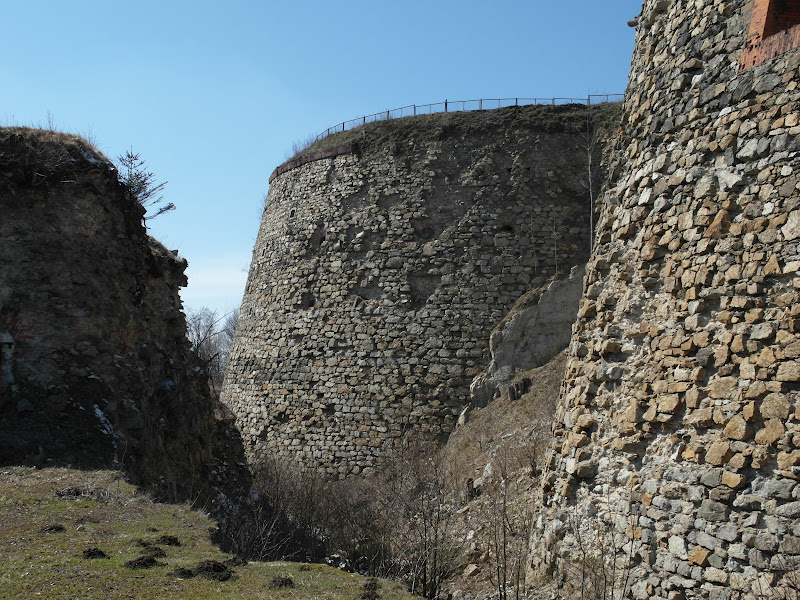
a view of the Ostróg Fort from the Warowna mountain 
I had no idea that a place only 70km away of Wroclaw was a witness to events of world-importance. Even though it happened 200 years, it is still very interesting. I am talking about the biggest mountain fortress in Europe, namely the fortress and village of Srebrna Góra (Festung Silberberg, Silver Mountain). 

/www.forty.pl/
Donjon - the main part of the Srebrna Góra fortress
In middle ages the place called Silberberg was often hit by military confrontations, at first by the Hussite Wars, later also by the Thirty Years' War, which left the area devastated. Being Silesian, then Bohemian, it was finally annexed by King Frederick II of Prussia after the First Silesian War with Austria in 1742. He wanted have a protection against Austrians, so he decided to build a border fortress of the Prussian Army, which was finished in 1778.
the plan of the Festung Silberberg (Srebrna Góra Fortress)
The fortress was constructed on the Silver Mountain Pass by 4,000 workers. The huge Silberberg Fortress guarded the passage to the Kłodzko Valley and consisted of six forts and several forest bastions. It is one of the most interesting examples of Polish military architecture.  Its main building is a big Donjon. There were 150 casemates (fortress rooms) located on three floors.  There were huge storehouses, nine wells, a chapel, prison, hospital, bakery, brewery, craft workshops and a gunpowder mill. It held  3,756 soldiers with enormous stocks of ammunition, food and firewood.  The soldiers had 264 mortars for the defence. Sounds really impressive!!!

/www.forty.pl/
Unfortunately the Napoleonic army lay siege to  the fortress in 1807 and as a consequence  the town underneath was almost completely destroyed.


main entrance that leads to Donjon

Donjon
Donjon
Can you spot the icicles? 
Napoleon soldiers;-)

near the High Rock Fort
peeping into the High Rock Fort inside
The picturesque village of Srebrna Góra was founded in the 14th century as a mining settlement by Saxonian miners, who came to explore the silver deposits. At the beginning of the 16th century it stopped being profitable, but still now it is possible to visit the well-hidden mining drifts. 

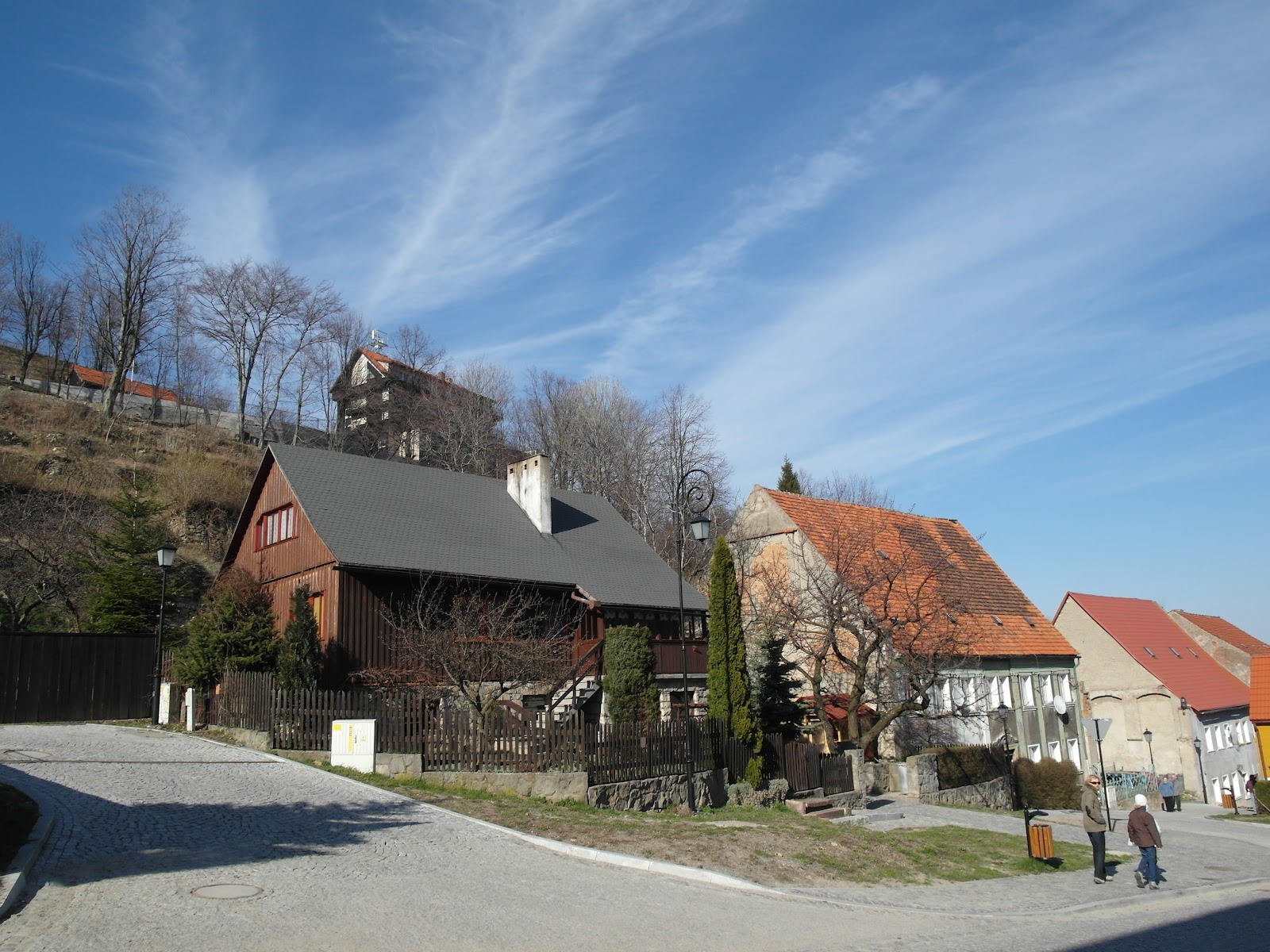
colourful houses and the catholic church behind
Napoleon and Protestant church in Rest Square

Mr Napoleon resting ;-)


Protestant church and the fortress far away in the background
Currently, the place boasts of interesting urban layout in a triangle shape stretched out along a steep valley . The fortress build on Warowna Mountain at the height of 686m above the sea level in a narrow valley separating Bardzkie Mountains from Owl Mountains  overlooks the village in a very dignified mannerJ. The views are breathtaking , the walking routes  interesting, the landscape – really lovely and after all that you can enjoy a nice picnic inside the fortress:)
The view on the Srebrna Góra village from the fortress
The Ostróg fort
Opening hours of the Srebrna Góra fortress:
10:00-18:00 /April-September/
10:00-16:00  /October-March/
Holiday weekends: 10:00-19:00
Official website of the fortress


Photos by K. Szostak - all rights reserved

Friday, 9 March 2012

LEŚNICA - MY LITTLE MOTHERLAND (1)

It will be ten years this May since we moved over here to live in the most special place in Wrocław called Leśnica (the western outskirts of the city, in German Deutsch Lissa). A lot has changed since then and how I wish now I had been taking many more photos of the place which I adore so much and which has become my little motherland. You pass the same streets and paths everyday and just take it for granted that they will always look like that. You don not even know when, suddenly, new buildings appear and the green remote fields and meadows vanish into oblivion, old buildings are pulled down or get renovated and,all of a sudden, you are not able to remember what they looked like before. They are just inside you, you can feel them and the general atmosphere, but if you want to share the feelings it would be much easier to have some more concrete sources. Again, you realize that everything is so fleeting…

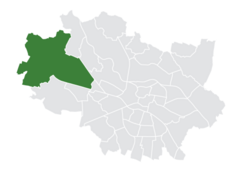
Map of Wrocław with Lesnica marked in green (from Wikipedia)

When we moved here in 2002 from a posh district in the south of Wrocław, the people either did not know where Leśnica was or they could not believe that we had changed living in one of the most luxurious districts into going to such a remote, unknown and neglected area. To get to our place you need to walk about 1km from the main bus and tram terminus or take a bus, if you are lucky, because it runs very rarely. At the beginning, it only added to the attraction of living here, because on both sides of our street there was nothing, but green fields, meadows, bushes, woods and some half-legal allotments. It was like entering a completely new world – after the hustle and bustle of the busy Wrocław, in Leśnica, when you passed the main Średzka street, you suddenly entered the slow-paced realm of silence and greenery, an avenue of beautiful old linden trees. Besides, to get to our street first you have to go past the stunning and recently renovated castle and a beautiful park – very quiet and relaxing as not too many people appear there (those from the city do not know about it or it is too far for them and the locals probably have not enough time or do not see anything special there). 


a fragment of the Leśnica castle and the sorrounding park (photo by K. Szostak)
Unfortunately, the peace and quiet of my street disappeared after a few years with more and more blocks of flats which replaced the wild fields.  Still, opposite my place, in just a few metres it is possible to enter the green lungs of Wrocław – Las Mokrzański (The Mokrzański forest) and go jogging, cycling or hiking there, do Nordic walking or just explore the Kirschberg (cherry mountain) aka Goering’s Park and search for the remnants of the amazing pre-war  mansion of Frau Breugmann – the owner of shoe factory, who used to fly her own plane to get to work in Wrocław (!), with huge gardens, fountains and pools in the past, nowadays almost completely covered by the forest.  The wide avenue of dignified hornbeam trees, appearing totally out of the blue when you enter the forest line in an appropriate place is absolutely breathtaking!!!!

View on the high street with the castle on the left and the water tower in the backgound
(from Wikipedia)
I was going to write about the amazingly rich history of Leśnica which dates back to the beginnings of the Polish state in the 10th century and which hosted almost all Silesian dukes as well as Czech and Prussian kings, but somehow I let it go with the flow and wrote about other things. But I will definitely come back, because this place is extremely fascinating!!!!!   

Tuesday, 14 February 2012

LOVE BRIDGE IN WROCLAW:-)

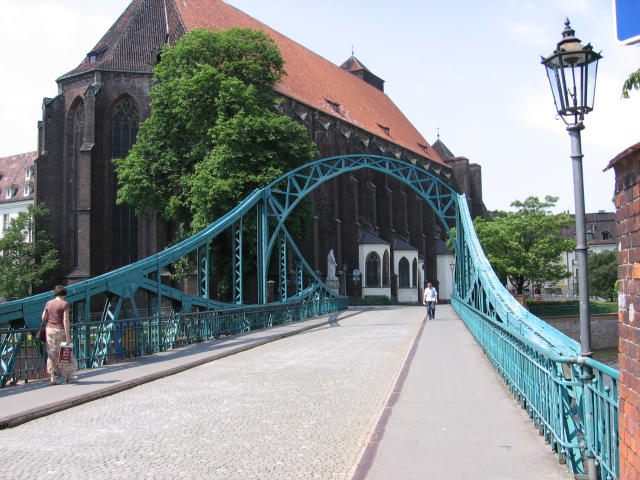
If you want your love to last forever, come to Wroclaw and lock it on the Tumski Bridge (in Polish: Most Tumski), the oldest bridge in Wroclaw. After fixing the padlock on the Poland love bridge you must throw the key into the river! The best time to do it is St. Valentine's Day:-)
photo by Adrianna Maria Thea Potocka/Wroclove on Facebook  
photo by Julo (Wikipedia)
photo by Magnaj (Wikipedia)
The bridge has been there for centuries (the Tumski island, where it is situated, is the oldest part of the city), but the first padlocks must have appeared in 2009. I saw them for the first time in July 2009, walking there with my German friend Andrea, who first noticed it. Since then, every time I'm there I am surprised by the growing number of padlocks and their amazing shapes. It's become a real tourist attraction:-)


The whole island, known also as the Cathedral island is a beautiful place itself, with old churches, quiet streets, cosy cafes and gas lamps lit up every day by a a lamplighter. He carries a special long pole to light up 92 gas lamps. I was lucky enough to see this special 'ceremony' one summer evening and it was really magical!
photo by my friend Miles
photo by Marek Ciechowski/mm moje miasto
Some other special love places in Wrocław:  

photo by mia amica Stefania
.... and outside Wroclaw, in the gardens of the magnificent Książ castle, 70km away: 
photo by me
Wishing you lots of love around you and inside you each day of the year!:-) 

Monday, 30 January 2012

WROCLAW SUPPORTS MUVALIA SCHOOL IN INDIA

I know that the blog should be about Wroclaw. But it is also about travelling and learning about other cultures, so I would like to share with you some information about my trip to India in April 2010. I was lucky enough to get invited to visit some Indian schools and, amongst others, a school run for the tribal kids in Muvalia district of Dahod city in the state of Gujarat. It was a lifetime and life-changing experience. There is also a boarding hostel, so that these poor kids, very often orphans, can be provided education, no matter how far from the school they live. I saw these extremely poor and basic living conditions of the kids in the hostel and the studying rooms, where they didn’t even have the minimum of ‘fresh’ air, i.e. not even the smallest under-ceiling fan. But the most striking thing is that the kids do not demand anything more, they have never seen a toy in their life, yet it is enough to make them happy just smiling to them, waving hello, shaking hands and making a photo together. They prepared such amazing artistic and dance performances for us! 

They youngest girls really liked our visit:-)

Mahatma Gandhi 
Studying room


Dormitory
The school and the hostel are run by Christian missionaries and lots of people of good will, who do a lot of hard social and educational work for the tribal people. They continuously struggle with the lack of drinking water and food and expenses for basic things. I was crying when I saw all this and immediately wanted to help the Indian children. I am not too big a fan of soft toys, but when I realized that the kids there had never played with anything like that and they had never seen a toy in their life I immediately came up with an irrational idea of sending them some soft toys (400!). It was a silly idea or rather a cry od despair, but it shows how much I got influenced by what I had seen and felt there and how much I wanted to help them, though, ironically enough,the kids were safe, smilling and looking happy. Yet, I was immensly struck and heart-broken by the extremely basic conditions they live in, and then, after talking with the headmaster of the school and the hostel, by the continuous struggle to keep the hostel running. In 1998 they started a boarding for the tribal children who have no facilities to go the school near their homes. The tribal people of this area have been systematically exploited by the dominant caste people and the charitable trust, which established the mission, are making efforts to liberate them from their clutches. The trust’s major interest is in the upcoming of the poor and marginalized tribal people of the surrounding areas. Their prime concern and the focus is on the education of tribal children which will definitely bring changes in their life as they grow. To provide quality education today they have a residential self-financing Gujarati medium primary School (1-7 classes) with 490 boys and girls. The students of the school live in the boarding hostels. They have also successfully established a social work department called Tribal Social Welfare Society. It runs developmental and women empowerment-related projects which take place in more than 40 villages. Yet, vast majority of the area of Dahod district remains untouched.

A tribal family in Muvalia village in front of their house
A kitchen in the tribal house
Hostels
Running a school for kids who live many, many kilometres away from their villages and cannot walk to that school regularly would not make sense without providing them a possibility of board and lodging. Thanks to the generosity of good people (including many Wroclawians) and charity organisations worldwide they run two hostels:  Adivasi Kumar Chatralaya (tribal boys' hostel) Adaivasi Kanniya Chatralaya (tribal girls' hostel), Muvalia.  The hostels are just not a place for sleeping but it is a large dome made up of discipline, knowledge, love and affection. Children are given ample opportunities to develop and to enhance their skills and talents through dancing, singing, rangoli making, public speaking competitions, playing various games and musical instruments. Knowledge and growth of technology is being built in them by reading daily newspapers and by conducting quiz-competitions. The children are given nutritious food in order to be healthy and to be more active in their daily tasks. Sports like football, volleyball, running, skipping and swimming keep up the sharpness and the growth of children.

The donations they received from the kind-hearted people of Wrocław in 2010-2011 have been used for the hostel kitchen provisions and for mosquito net fittings in the hostel building.

Everyday bath in the nearby river
School milk-giving buffalloes
Waiting for lentils dal
Teeth brushing
Washing up after a meal
They sleep almost on the plain floor
School
At present there are 370 boys and 120 girls in the residential school and they come from a very poor background, most of their parents are migrant workers and small farmers. The children are not orphans but they are poor tribal children who have no facilities to go to school near their homes. These children are from 25 villages of the tribal district of Dahod. It is quite difficult to find funds for feeding them three times a day. On average they use 120 kgs of rice, 75 kgs of wheat flour and 6 kgs of lentils dal. Besides this, they need money for vegetables, oil, masala (spices), firewood and three cooks salary, etc. 
“It is a noble task but it is a challenging one, but we do it to provide a better and dignified future life for the poor tribal children. We give importance for academic studies and also initiate them to extracurricular activities like sports, games, cultural and literacy competitions. We do conduct weekly and monthly tests to evaluate the progress of the children in the school and weak children are given special coaching classes in our hostel premises.” (from the headmaster’s letter).


Performing regional dances - Indian kids love dancing! 
What are the future needs of the residential school children at Muvalia?

1. They need support for the kitchen provisions (rice purchase) at least for six months.
 2. They need to build some more toilets in the boys' hostel building.
 3. They need to provide 60 desks and benches for the school classrooms.

If you want to help, please send me a personal message at info@welcome2wroclaw.pl. You can make a general donation or pay for education and food of an individual child. Thank you!


P.S. On 15 January there was held the second big charity event for raising funds for the school in Muvalia. The next one - a concert - is going to take place on 26 May.
All photos by Katarzyna Szostak and Muvalia School.